The World's Largest Modern & Contemporary Prints & Editions Platform
Ravine

Ravine
Signed Print
Gerhard Richter
75 x 62cm, Edition of 45, Photographic print, 1997
£14,000-£21,000
$27,000-$40,000 Market Value Indicator
$26,000-$40,000 Market Value Indicator
¥120,000-¥190,000 Market Value Indicator
€17,000-€25,000 Market Value Indicator
$150,000-$220,000 Market Value Indicator
¥2,950,000-¥4,420,000 Market Value Indicator
$19,000-$28,000 Market Value Indicator
There aren't enough data points on this work for a comprehensive result. Please speak to a specialist by making an enquiry.
Track Auction Value Trend
Meaning & Analysis
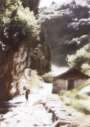
Ravine is a photographic print by Gerhard Richter, produced in 1997 and signed in an edition of 45. The work depicts a rocky gorge: a limestone cliff on the left, a stone pathway through the ravine floor, a small solitary figure at the lower centre, a rustic stone building in the middle distance, and dark storm clouds massing above. Richter's characteristic blur suffuses the scene with a dreamlike, slightly threatening stillness.
The ravine paintings and associated photographic prints represent one of the most significant landscape series of Richter's mid-career. From the 1990s onwards, he turned from the coastal and mountain views of his earlier landscape practice to enclosed, dramatic gorge scenery – scenes characterised by sheer rock, worn paths, small human structures, and the constant implication of weather. The source material, as with many of these works, derived from photographs taken during travels in southern Europe.
In Ravine, the compositional elements produce a tension characteristic of the Romantic sublime without quite resolving into it. The sheer limestone cliff dominates the left, its warm golden-brown surface catching light against the dark, storm-heavy sky at upper right. The small figure on the stone path – dwarfed by the surrounding forms – provides the human scale against which the gorge's grandeur registers. The rustic stone building in the middle distance gives the scene an inhabited quality that complicates any reading of the landscape as purely wild.
Throughout, the blur is doing its central work: softening every edge, merging cliff into foliage into cloud, making the scene vivid and uncertain in the same breath.